

The Australian government recently made international headlines for officially becoming the first country in the world to implement a formal law that will bar adolescents from using social media.
Time and time again, giant tech conglomerates such as Meta, Snapchat, Tik Tok, X, Youtube and more have taken advantage of the adolescent user through addictive algorithmic models that aim to exploit the psychology of the young mind to spend more time on these platforms, which has been shown to cause mental health problems and contribute to unrealistic body standards.
Now, Australia has taken action to protect its youth.
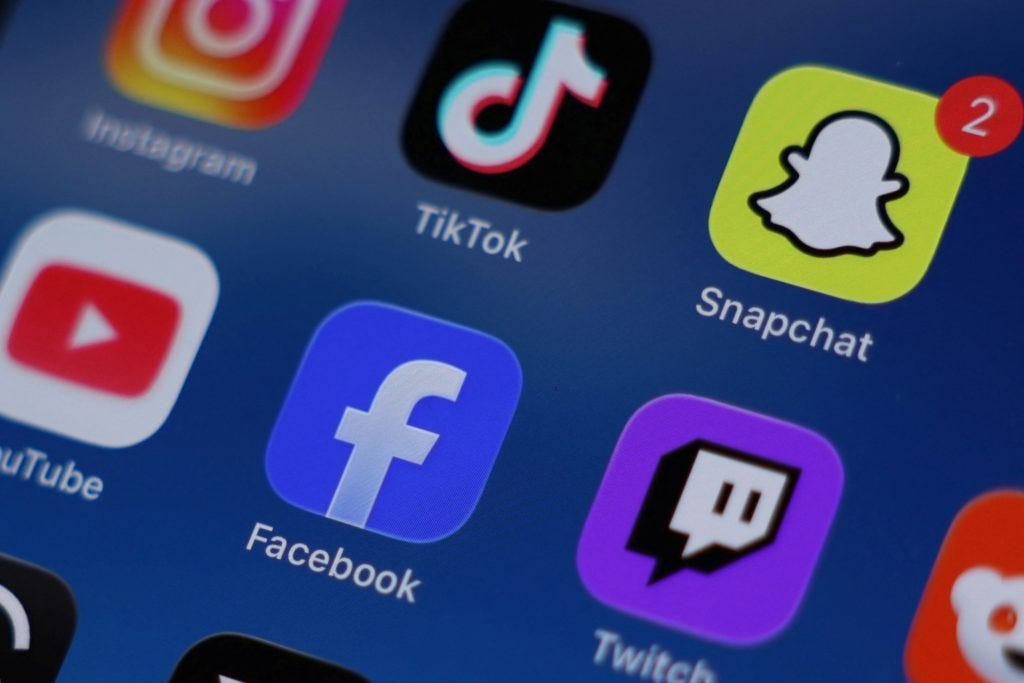
Starting from Dec. 10, 2025, any minor under the age of 16 in Australia will be prohibited from keeping and/or creating social media accounts on platforms like TikTok, Instagram, YouTube, Snapchat, X and Facebook. In the coming days, it is expected that these corporations will take reasonable steps to prevent anyone under the age to garner access to such accounts. Failure to do so will result in a $49.5 million (AUD) fine.
Meta has already started removing users between the ages of 13 to 15 years old, notifying them that “their accounts would start being shut down from 4 December.”
On Dec. 3, Anika Wells, the current minister for communications under the Albanese government, said in a public press conference that,“our world-leading laws will give kids a three-year reprieve from predatory algorithms, toxic popularity meters and harmful content manipulating Australian children.”
The law that was passed in November 2024 by the Australian parliament sparked mass controversy and opposition from academics, civil society organizations and international experts who have described the bill “as ineffective at best and a violation of children’s human rights at worst.” It was passed despite criticism from conglomerate tech corporations that have argued that the legislation was rushed and that there are still many questions the Australian parliament has yet to address.
However, despite such critiques by social media users and tech corporations, people are now being forced to comply with the Australian parliament and new legislature that has been passed.
While the actions of the Australian government are commendable in terms of passing legislation around a complex ecosystem of algorithms and adolescent behavior, real change will come from demanding giant tech conglomerates change their internal policies, altering models and algorithms that are exploiting children online by making them more tempted to stay addicted to the apps.
However, Australia’s legislative action reduces harm given the current realities of how social media functions, and perhaps the U.S. should learn something here as well.
In a time of deep division and polarization, protecting children online often has support from US voters of different political affiliations, races, genders and socioeconomic classes.
Earlier this month, the House Energy and Commerce Committee convened its hearing that spanned 19 bills to discuss “age verification, data privacy, parental controls, AI and platform transparency, screen time, scientific research, digital literacy, and more.” During the hearing, Republican and Democratic lawmakers discussed taking the Kids Online Safety Act (KOSA) into consideration. This act was introduced in the House in 2021 and aimed to require social media platforms to protect the data of minor children, but it has been stalled in Congress since July 2024.
There was also discussion around updating the Children’s Online Privacy Protection Act (COPPA), a federal law that was enacted in 1998 to protect the privacy of children under the age of 13 and has not been updated by policymakers and legislators since.
This is where the United States can learn from Australia. While the United States continues to debate child safety, Australia has taken action, and soon a domino effect may be seen taking place in other countries as well. For example, the Washington Post notes that in “Malaysia and Indonesia, … policymakers debate whether the model is worth emulating.”
Children are a vulnerable group in our society, and our collective societal decisions affect 21st century children, which is why it is so incredibly important to protect our children.
Many critics of this policy have argued that the age verification process could require parents and underage users to upload sensitive biometric data, putting users’ personal information at risk as they verify their age. It could also isolate and exclude individuals from forming effective online connections.
The Australian Human Rights Commission writes that this policy “may potentially require all Australians to provide social media companies with sensitive identity information, which poses a risk to our privacy rights in light of recent examples of data breaches and personal information being stolen.”
However, many of these giant tech corporations have proven how they have failed to protect children’s safety online, which has forced the Australian government to take such drastic measures.
Meta has played a prominent role in such lawsuits. In a case filed against Meta in November 2025, Vaishnavi Jayakumar, former head of safety, testified that when she joined Meta in 2020, she was shocked to learn that the company had a “17x” strike policy for accounts that reportedly engaged in “trafficking of humans for sex.”
More than 1,800 plaintiffs, including children, parents, school districts and attorneys general, have come together to argue that parent companies behind major social media apps are pursuing strategies that are destroying children’s mental and physical health and should not go unnoticed.
While simply placing an age restriction on social media apps likely will not fully resolve the issues, it is a step in the right direction. Protecting children’s safety online is fundamental, and it is imperative that we work together to do so. Australia has already taken a step in a positive direction. Now, it is time for the rest of the world to follow.