
The Quiet Power of Resemblance
Where I End and My Mother Begins

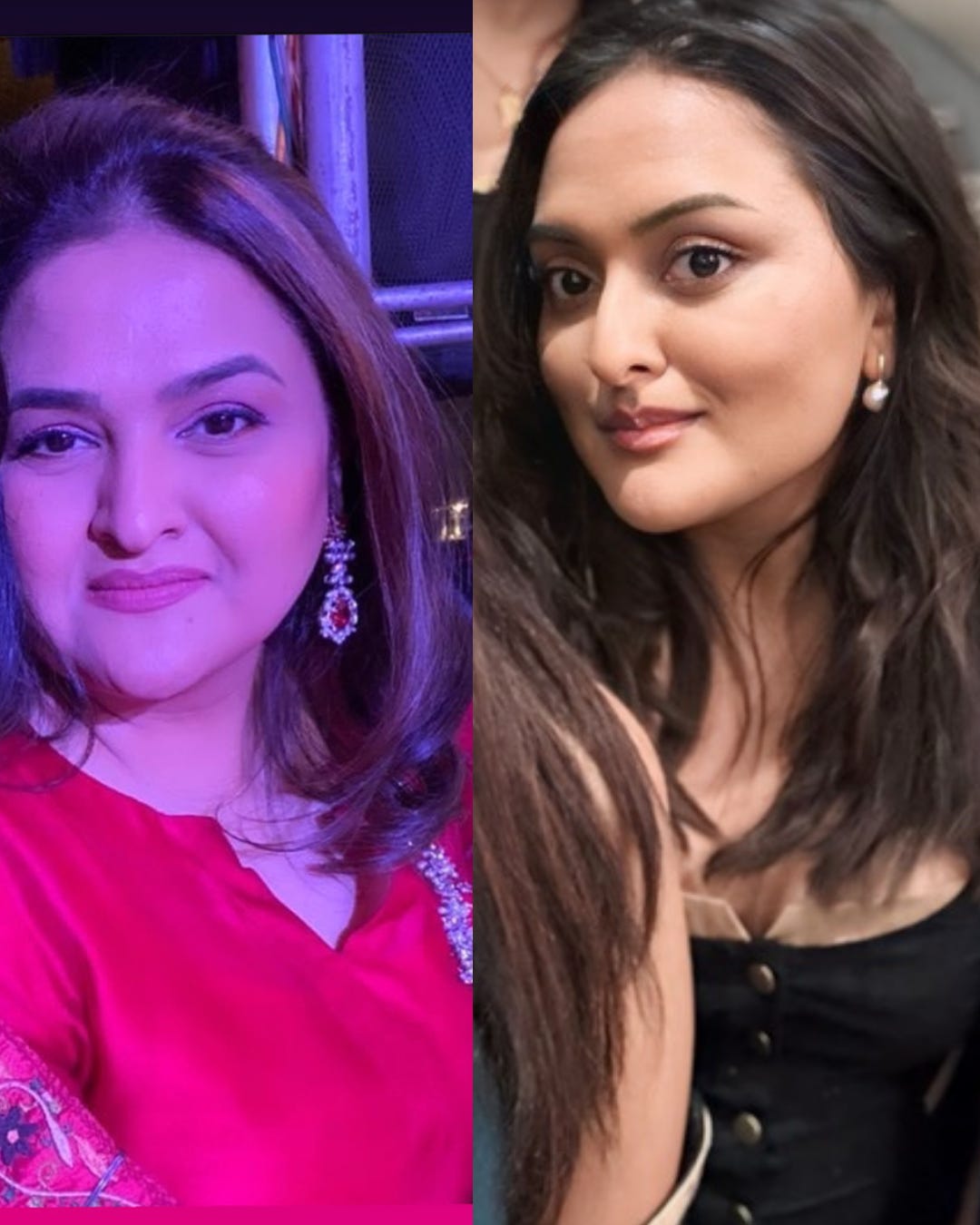
As a child, hearing, “You two could be sisters!” used to grate on me.
My mother would always be flattered. With a beaming smile, she’d tell everyone, “No, this is my daughter, but I guess we do look like sisters,” or sometimes, “I am flattered, thank you for your kind comment.”
As a child, these comments bothered me, not because I thought my mom wasn’t beautiful; she is the most beautiful woman I know, but because I wanted to be my own person. I wanted to be independent.
Growing up, my mother was everything I admired: effortless, strong, intelligent, stylish, outspoken, and confident in ways I couldn’t even comprehend. Everyone noticed it, everyone admired it. Still, despite all that, I just wanted to be me.
Like any adolescent navigating this ever-changing, convoluted world, I was obsessed with figuring out who I was: my style, my words, my gestures. They all felt like pieces of a puzzle, but then people would say, “You look like your mom.”
Day to day, my mother and I rarely commented on our features. But around relatives or close friends, someone would always remark: “My goodness, you are literally a copy of your mother, Ayra,” or my favorite, “If you look at pictures of your mom at your age, you look just like her.”
Even in high school, it annoyed me. My mother is beautiful in her own way, and so am I. Why does everyone feel the need to point out that we look alike?
I remember one time, after a relative commented, I said, “Mama and I actually don’t think we look that alike; we have very different features.” They responded, “No. You are literally your mother, Ayra.”
Even on social media, the comparison followed me. When I would post selfies of us on Instagram, people would reply: “You guys are twins,” or, “Mama Rafiq really said Ctrl C, Ctrl V”— I’ll admit, that one actually made me laugh. But still, I’d wonder, Where? Am I just blind to it?
As time went on, I’d catch myself looking at my mother, thinking: Everyone says we look alike, but I don’t see it. My mama is the most beautiful person I know. Why does everyone insist we look so similar?
Whenever someone commented on our resemblance, I would smile politely and say, “Can’t say I haven’t heard that before,” and laugh it off.
But something shifted as I got older. I began to see her in me, not as a copy, but as a foundation. I noticed her strength and presence in new ways and realized how lucky I was to carry them. I didn’t just look like my mother; I was a part of her.
I also began noticing the small, daily habits I’d once rolled my eyes at. When I was younger, her anxious cleaning would frustrate me. She’d always be working on her computer, ironing, or tidying the house while watching TV. I used to ask Mama, “Why do you always need to be doing something?” Just relax. Now, I catch myself doing the exact same things, and I understand why.
Watching her cook while cleaning, I used to think she was insane. She told me it made life easier. Turns out, she was right.
Over time, I started noticing our resemblance in different ways. Not as a limitation, but as a legacy. In the shape of my jaw, the tilt of my eyes, the way I carry myself, I saw traces of her. Not as someone I had to be, but as someone I was allowed to inherit.
Looking back, I realize the reflection I once resisted was never a threat; it was a gift I hadn’t learned to recognize. For years, being told I looked like my mom felt like a weight, as if it made me less of myself. Now, though, I see it differently. When I look in the mirror, I don’t just see my own face, I see hers reflected in mine. I see her strength, her beauty, her presence. Loving that reflection doesn’t take away from who I am. It enriches it.
Being told I look like her is now a reminder of my roots and the strength flowing through my family. My identity is unique, but layered and shared, formed by both individuality and legacy. I carry both of us within me, and in accepting this, I’ve found a greater pride and love than I ever expected. The key message is this: resemblance is not a limitation, but a connection and an inheritance.
This is lovely Ayra!