
Suddenly Everyone Is a Designer Bag Connoisseur
Apparently we’re all luxury critics now.

Here is a hot take: social media has ruined luxury brands. As an active social media user, I have been exposed to an intense level of overexposure of Chanel, Hermès, Gucci, Prada, and more, which has eroded the mystique and exclusivity that once defined high-end brands.
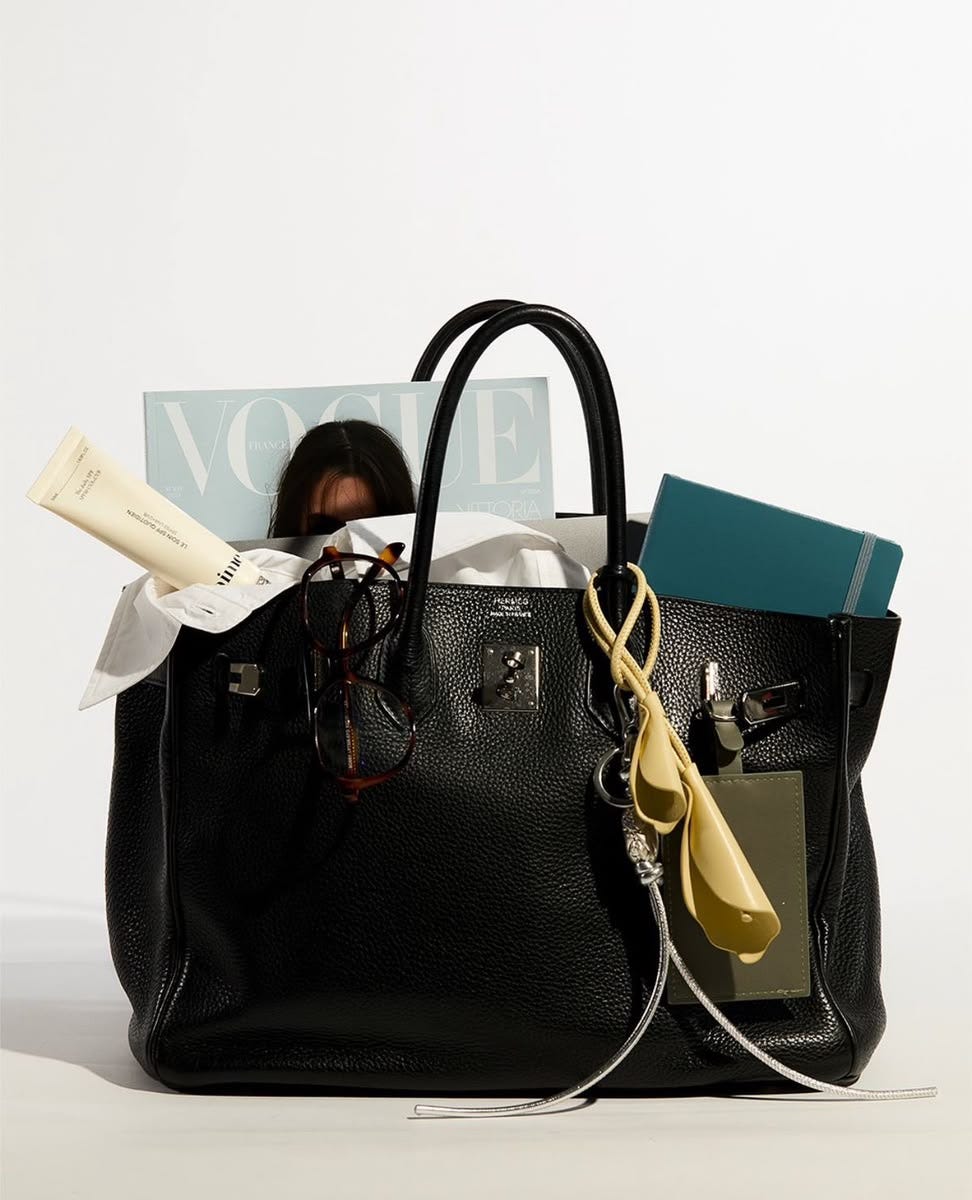
Now, all of a sudden, out of nowhere, everyone is a designer bag connoisseur. People on TikTok and Instagram reels are claiming out of nowhere that they can spot a fake Birkin 30 from a mile away, because at the end of the day, no one is about to place a $100,000 financial investment on the floor of a sleazy restaurant. (I mean, come on, that is just foul).
There was a time… a decade or so ago, when a bag was a bag. You saw one you liked, you thought it was pretty, and if you were lucky enough to get it, you wore it until the straps started giving up on you altogether. There wasn’t a full investigation process beforehand. Nobody was conducting a leather analysis, calculating the ‘cost-per-wear’, or debating if the silver or gold metal hardware on the bag would be trendy in the next five years.
For example, nearly fifteen years ago, my mother bought the classic Chanel flap bag. Even though I was quite young at the time, I remember her telling me one thing: Ayra, this isn’t just an investment piece; it is a generational heirloom that will be passed down to you, and then one day your daughter.
There wasn’t any is this trendy, is this what is in style right now, or even who is wearing this? Fifteen years ago, everything seemed more simple, more distinct. Now everything feels different.
And here I’d like to blame the so-called fashion influencers of the Upper East Side, who are now strutting down Madison Avenue with their Kelly 25 undone, acting as if they are the pioneers of high-end fashion. Newsflash, sweetie: you are not. Not even close.
I think it is fair to say that influencers have completely ruined the way we are supposed to consume high-end fashion.
Before, when you saw someone with a designer bag, it was beautiful. It was unique. It was resplendent. You would often spend a few moments admiring the bag before moving on.
Now every bag comes with a ten-minute review, a ranking list, and an explanation of why it is “worth the price tag” or why it is absolutely “not worth the money.”
The other day, I came across a very compelling TikTok, if you will, where a street interviewer was walking down Bond Street in London, holding two Birkin 30s. One real, and one fake. The interviewer interviewed a diverse group of upper-class women, asking them to identify the real and fake Birkin.
In the span of five minutes, all these women had become in-house connoisseurs of Hermès luxury bags. They began by flipping the bag by 90-degree increments, smelling the leather, checking the placement of the hardware, using the magnifying feature on their iPhone to examine the logo stamp, and noting that the stitching was apparent.
After they finished their little spiel, the interviewer told them whether they were right or wrong. Almost every woman was wrong. Every bag she claimed was fake was real, and the one they claimed was real was fake. The majority of them were confused, embarrassed, and simply didn’t know what to say.
It made me think: these women spoke with such certainty. They were almost convinced that they had luxury down to a science. As if authenticity can be distinguished through instinct alone. As if owning or seeing enough expensive things grants you a sixth sense.
But I think it has reached a point where people don’t just want designer bags anymore. They want the authority that comes with them. They want to be the person who knows. The person who can identify quality from a mile away. At the end of the day, they want to be the person who can tell someone what is tasteful, and what isn’t.
And I think influencers have played a huge role in creating that narrative, because we consume constant content daily, teaching us how to identify “real luxury.” We watch day-in-the-life influencers call their SA to pick up their new Birkin or their Small Andiamo from Bottega. We hear the same opinions about bags over and over again until they are memorized verbatim in our heads.
The irony was almost painful. Here were these women standing on one of the most luxurious streets in London, examining bags as if they were conducting forensic investigations, only to discover they were wrong almost every time.
And suddenly all I could think was: if people cannot even tell the difference between the real thing and the fake thing while holding it in their hands, then what exactly are we all pretending to know?
Somehow, fashion influencers and obnoxious women who I’d argue never even knew about these designers a decade ago have managed to turn fashion into mere homework.
There are rules now. Things are ‘in,’ and things are immediately out. Oh, you didn’t buy the new Chanel mint-green Crocodile Embossed Calfskin & Gold-Tone handbag for $8000. Do you even know fashion? Or saying things like, You know my SA told me at YSL that a dupe is so easy to spot. Ever since he told me, I can see them from like a mile away.
Somewhere along the way, we stopped appreciating fashion and started performing it.
Fashion was once about personal taste. It was about seeing something beautiful and loving it for no reason other than the fact that you loved it. Now it feels like every purchase needs to survive public examination. Every bag needs to be justified, ranked, reviewed, approved, and deemed worthy by the internet before someone can even enjoy carrying it.
And perhaps the saddest part of all this is that luxury brands built their reputations on exclusivity, mystery, and aspiration. Yet social media has turned them into content categories.
So no, I do not think social media simply changed luxury; I think it stripped away the very thing that made it feel luxurious in the first place.
Because once everyone suddenly becomes a designer bag connoisseur, perhaps no one really is.
I really loved this one! I have never thought about it this way, thank you!