

I’ve Seen the World, But Not Without Panicking at 30,000 Feet
I used to love boarding passes. Now I dread them

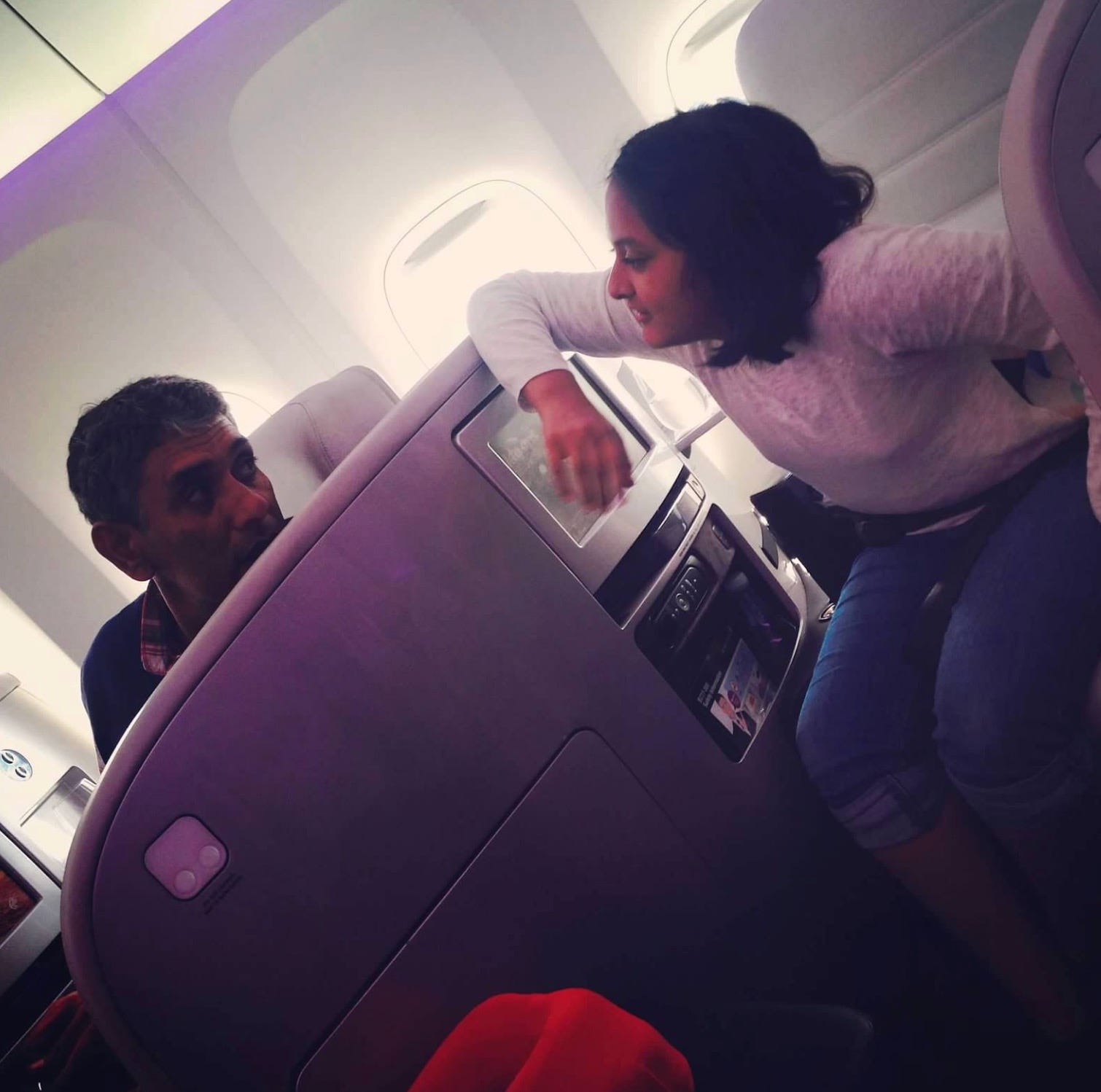
I have been traveling for as long as I can remember. As a child, the airport always brimmed with adventure for me: the anticipation, the thrill of new beginnings, the subdued hum of people departing. It was never just a place of transit; it was a place of possibility.
When I was younger, whenever someone asked what I wanted to be when I grew up, I replied without hesitation: “I want to be a flight attendant because I want to travel the world.” The freedom of being in the sky, always moving, always discovering, felt magical. As a child, flying didn’t scare me; it defined me.
I still remember one of my earliest flights alone. I was nine years old, and my parents let me travel from Denver to Washington, D.C. by myself. Looking back, it feels surreal. But at the time, I wasn’t scared at all. If anything, I was excited. I think that’s the beauty of childhood — ignorance really is bliss. There was no fear, no overthinking, just pure excitement at the idea of independence.
That flight is still vivid in my memory. It was around 2012, and I flew Frontier Airlines. I remember watching two animated movies, eating nachos served by the flight attendant, and feeling completely at ease.
When the plane landed, I was the last one to deboard. I walked out into the terminal, and there was my aunt waiting for me. Everything about that experience felt safe, simple, and even joyful.
But somewhere along the way, something changed.
As I grew older, I became more aware of myself: my body, my thoughts, my surroundings. Gradually, I began experiencing anxiety when I traveled. Flying, suddenly felt unfamiliar.
The excitement in my stomach turned to panic. My heart raced. My thoughts spiraled. I felt outside myself, watching reactions I couldn’t control.
By my second year of college, I remember thinking, “Where is this coming from?” I had traveled so much. I had done this my whole life. So why did it suddenly feel so difficult? Why did something that once brought me so much joy now feel like something I had to endure?
In recent years, I’ve found myself going down rabbit holes I never considered Googling, “Is air travel the safest form of travel?” or “How dangerous is turbulence?” or “How qualified are pilots?” I check the weather before flights, trying to anticipate turbulence and control what I know I can’t.
One flight stands out. Last year, I flew to Istanbul overnight. Before boarding, I had a plan: watch a movie, eat dinner, take two melatonin gummies, and sleep so I’d wake up renewed. It sounded easy enough.
In the middle of dinner, severe turbulence struck without warning. The jolt was abrupt, and my body responded instantly. My chest constricted, my thoughts raced. I glanced at the passengers, the flight attendants. Everyone else appeared composed. Unfazed. Ordinary.
And I remember thinking, “Is it just me?” “Am I overreacting?” “Is this not normal?”
After a few minutes, the turbulence passed, and the flight felt normal again. Yet the unease lingered, and I remained on alert as I tried to process the emotional aftermath. I realized that the physical safety of the moment did not immediately soothe my inner worry.
About an hour later, I asked the flight attendant to make my bed. I took a melatonin gummy, hoping it would help me sleep. But then the plane started shaking again, this time over the Atlantic. Half the cabin was asleep, completely at peace. And there I was, wide awake, trying to convince myself to relax.
“Okay, Ayra, let’s just go to bed,” I told myself.
Instead of calming me down, the melatonin made me feel more anxious. My body felt heavy. My mind wouldn’t stop. I grabbed my energy stone, opened my book, and tried to ground myself in something familiar. Eventually, I managed to fall asleep, but only for an hour.
And even that felt new to me.
I had never been afraid to fall asleep on a plane before. It used to be something I cherished; drifting off in the air brought a sense of comfort and wonder. But now, sleeping on flights felt uneasy, tangled up with uncertainty rather than magic.
Now, it feels like a burden.
At some point, I realized something common for people my age: as you grow older, you become more aware of what you could lose. Life feels more real, more tangible. The stakes rise, even in safe situations. Flying didn’t change, but I did.
Now, I routinely fly from D.C. to Denver or up the coast. Logically, these feel ordinary, but emotionally, anxiety often lingers.
That’s the hardest part. Anxiety replaces the joy I once felt flying, and it’s exhausting, especially on hectic travel days. Sometimes I just wish flying could feel effortless again.
I tell myself it’s just a phase. Something temporary. Something that will pass. And maybe it is.
But what I’ve come to realize is that even with the anxiety, I still show up. I still get on the plane. Every single time. And that matters.
Because maybe courage doesn’t look like fearlessness. Maybe it looks like doing the thing anyway, boarding the flight, sitting through the turbulence, quieting your thoughts as best as you can, and trusting that you’ll land safely on the other side.
I may not feel the same excitement I once did as a child, and flying may never feel completely effortless again. But I haven’t stopped traveling. I haven’t let the anxiety win. And for now, that’s enough. Because even at 30,000 feet, with a racing heart and an overthinking mind, I’m still choosing the world.