
Influencers Are Obnoxious and Love to Promote Mass Consumerism
Influencers Aren’t Trendsetters, They’re Salespeople

Social media has allowed many of us to become aware of different aspects of society that we otherwise wouldn’t have been accustomed to.
Over the past two decades, its emergence has created a whole new industry, including social media marketing, digital marketing, and influencer marketing. It has allowed individuals who were traditionally tired of the 9-5 grind and weren’t necessarily entrepreneurs to pave their own careers.
However, while it has rightfully opened so many doors for individuals, I can’t help but notice that the culture it’s created is now dominated by performative consumerism and extreme displays of wealth, making social media spaces increasingly frustrating.
The world feels incredibly dystopian right now. At the moment, wars are emerging across the global south. Even here in the United States, we are living in turbulent times where the cost of living continues to skyrocket, trust in institutions is lower than it has ever been, climate change is happening before our very eyes, and healthcare, education, and mental health crises are on the rise.
Yet, instead of addressing urgent issues or encouraging responsible action, we have started to glamorize mass consumerism, promoting lifestyles built on constant consumption rather than substance or social improvement.
Every time I open Instagram, it seems influencers are flaunting their luxurious travels, designer gifts, or exclusive event invites. I’ve watched this trend for years, and frankly, I’m over it. It now feels overwhelming.
What bothers me isn’t their success; many work hard to build social media careers. What I object to is their relentless promotion of consumerism, flaunting six-figure ad deals while encouraging constant consumption. Frankly, it’s disgusting.
Influencers aren’t trendsetters; they’re actually the opposite. They just follow trends and take credit for them, which is especially annoying. For most, neither they nor their style seems revolutionary. Just another form of basic.
For example, it’s funny how the viral ‘90s blow-dry recently became so famous in pop culture. In 2020-21, almost every influencer had the Dyson Airwrap, and the hair dryer brush sold out. On TikTok, everyone was pulling up Jennifer Aniston or Cindy Crawford for hair inspiration.
Meanwhile, anyone who grew up in South Asia, or is South Asian (like me), would know that this isn’t a trend invented by basic influencers trying to “bring back the ’90s” (when half of them weren’t even alive). In South Asia, a region that includes countries such as India, Pakistan, Bangladesh, Sri Lanka, Nepal, and others, this blow-dry style is a salon staple that has existed for decades: sleek, polished, and perfected long before influencers made it a trend. In fact, the majority of South Asians have naturally thicker, luscious hair, which makes this type of blow-dry particularly well-suited to our hair.
Suddenly, a $500 hair gadget becomes a “must-have,” and your feed is flooded with tutorials, sponsored posts, and endless unboxings. The marketing suddenly isn’t about hair or heritage; it is about selling a lifestyle that promotes effortless glamour, exclusivity, and the idea that owning the tool makes you somehow more special. (News flash: it doesn’t.)
My favorite is the first-class brag: influencers showing off a full skincare routine at 35,000 feet. Most haven’t cared for skincare before, yet readily promote Caudalie serum, Korean face mist, and layered creams. The rest of us are just trying to cope with tiny tray tables and recycled cabin air.
This content is performative, exhausting, and somehow marketed as aspirational. Yet the normalization of these displays only strengthens a cycle of consumerism, shifting our values toward material status.
Look, I’m not hating on social media fashion, beauty, and lifestyle creatorsthey’re all hustlers. My main issue is that, despite their immense resources and so-called wealth, they continue to promote the industry’s negative aspects instead of using their influence for good. The industry, saturated over the last decade and a half, now seems to foster an army of influencers afraid to break the mold, making its glamorization depressing.
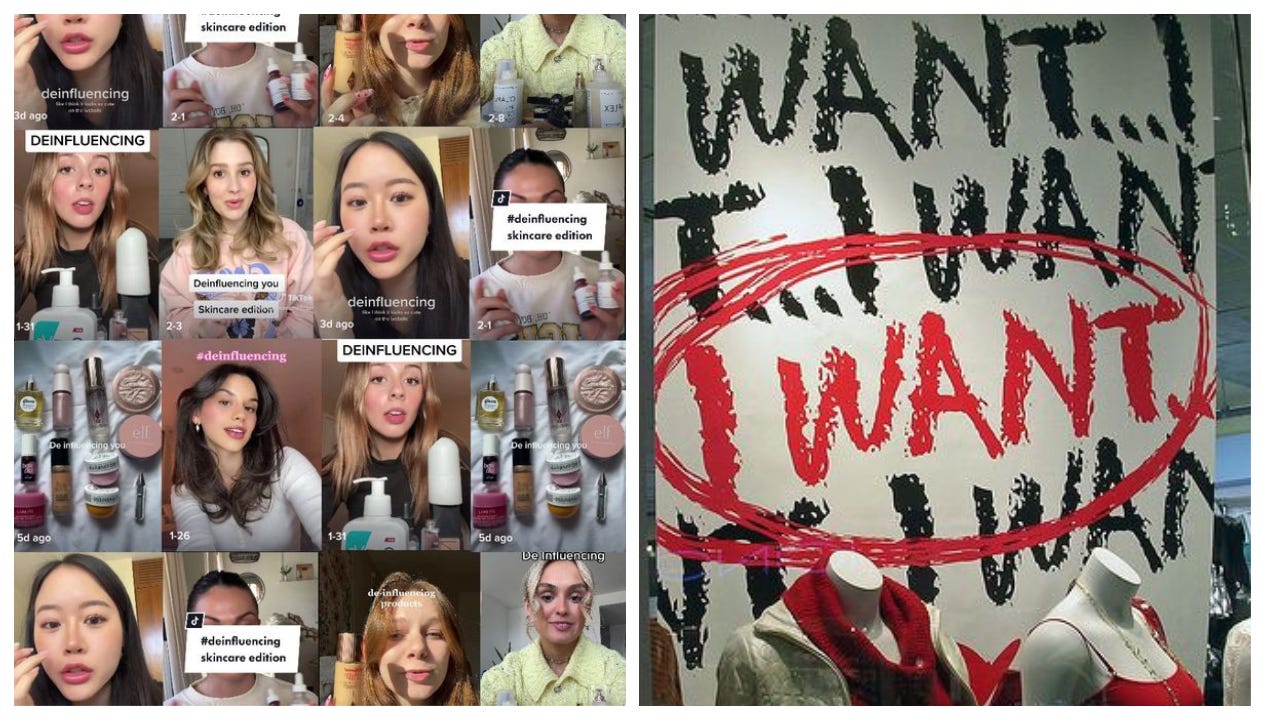
Influencers don’t just share products; they turn daily routines into marketing campaigns engineered to spark constant desire, normalization of overconsumption, and the illusion that fulfillment comes from perpetual buying. This shift is less about beauty or innovation and more about perpetuating a culture of endless material aspiration, and that is not okay.
Great title, which your essay certainly delivers on. I agree with you that these people are contemptible (perhaps you’re not willing to go that far, but I am). But wouldn’t you acknowledge that the deeper problem is not the influencers, but the influenced? They’re the ones that make me despair for the future of humanity.
Good points were made here. I think it’s fine for people to use socials to promote themselves and their dreams, but there is a point where it becomes soulless.