
A Battle With My Body: Living with PCOS
What no one tells you about living in a body that's constantly negotiating with itself.

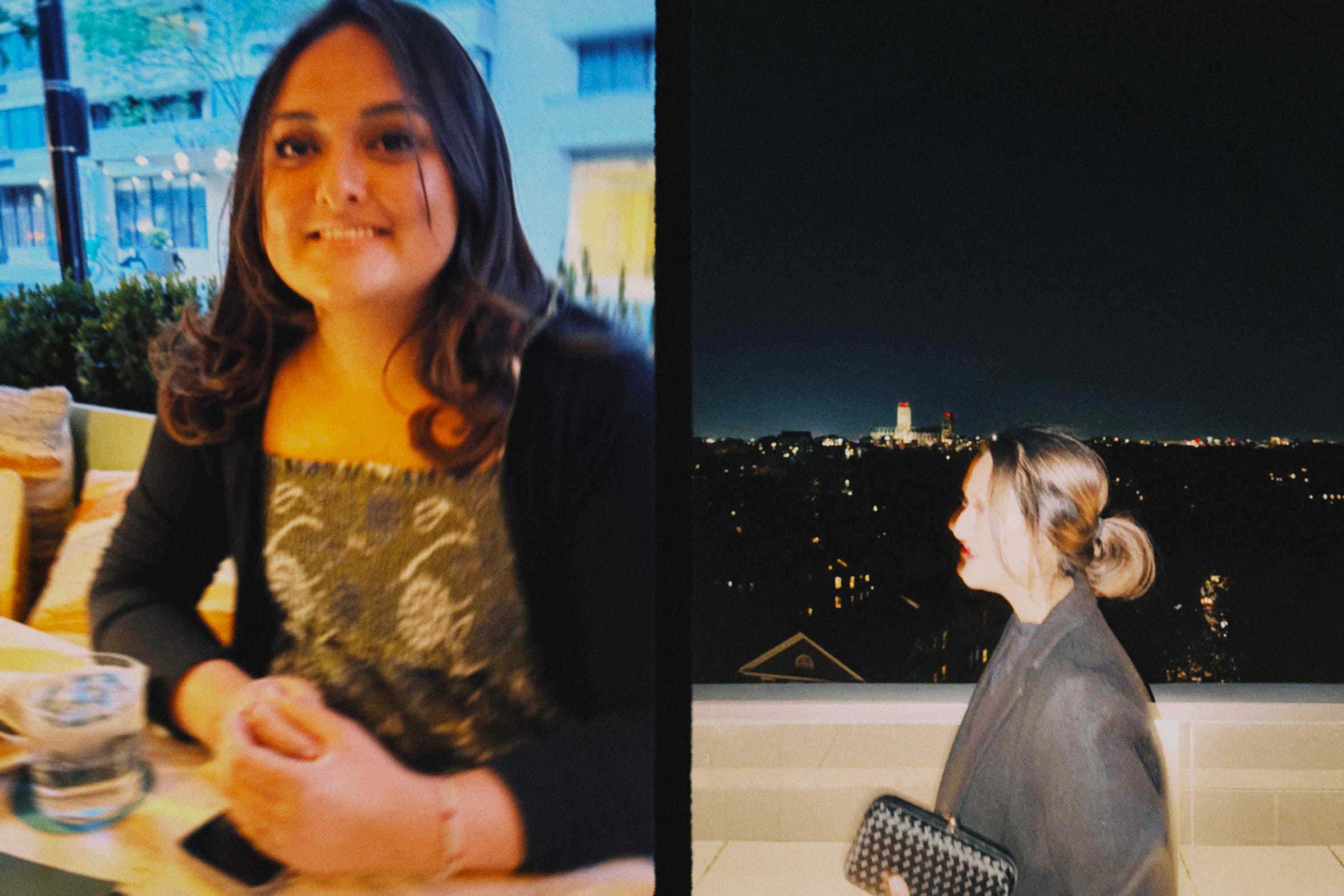
Polycystic Ovarian Syndrome, better known as PCOS, sounds clinical, like something that can be managed with a checklist or prescription. But for millions of women around the world, myself including, it’s a daily battle and negotiation with your body, your hormones, your self-image, and the way the world treats you when your body doesn’t behave the way it wants it to.
My diagnosis of PCOS wasn’t easy; it wasn’t fair. From a young age, I have always struggled with weight gain, cystic acne, excess hair growth, and oily skin. I have been on countless diets since I was in middle school and have tried every trendy workout class from CorePower to SoulCycle, but nothing budged.
It all started in college when I, like many college freshmen, gained in a reasonably short period of time the infamous “Freshman 15.” Within six months, I had gained an upwards of 20 pounds. I didn’t feel real. I felt like I was losing control of my body.
I remember looking at the scale and thinking, “Oh my goodness, I need to lose this weight.” When I asked the doctor what I should do, she told me to consume more protein, lift heavier weights, and get more cardio. So naturally, I immediately signed up for a high-intensity yoga sculpt class to lose the weight.
Months went by, and I wasn’t losing any weight. In fact, the workouts were causing me to gain more. After a few months, I accepted defeat and thought to myself, “This simply could be my body type.”
However, as time went on, my body got bigger. Chairs began to feel tighter, and I started to become more aware of my body in rooms where I used to forget about it entirely. I felt heavier and anxious.
I remember being so confused. “What could I be doing wrong?” “I try to be healthy.” “I eat my vitamins every day.” “I walk about 10k steps a day.” “Perhaps I just need to drink more water.”
In early 2024, I decided I needed to lose the excess weight. Naturally, living in a big city, I was walking close to 10k–12k steps a day, running three miles on the treadmill, and going to every hot yoga class in between. However, after I worked out, I would have the most intense cravings, whether sweet or savory. The scale still wasn’t budging.
My face was getting swollen, my hunger cues were becoming confusing, and, most importantly, as a girl who has always loved fashion and getting ready, it started to feel like an emotional labor.
It was then that I realized I needed to see a doctor to get myself checked. The first doctor I went to spent a maximum of five minutes with me. I remember telling her how frustrated I was that I wasn’t losing any weight. She looked at my chart and told me, “Your weight is concerning. You are on the verge of becoming diabetic. You need to start eating healthier, practice a Mediterranean diet, and exercise.” (I was already doing that.)
I remember coming home and crying. I thought to myself, Is it really that hard to lose weight? I then saw the next doctor, who told me to consume more protein but recommended I make an appointment with the gynecologist.
I then went to the gynecologist, where, after receiving blood tests, they told me that my HbA1c, FSH, LH, prolactin, and testosterone all came back borderline. Close enough to worry, not enough to diagnose.
My labs lived in the gray area, where symptoms exist but certainty does not.
She recommended that I keep doing what I was already doing.
Burnt out by my high-intensity workouts, I quit hot yoga and decided not to do anything drastic, just focus on eating healthy.
Nothing was working. At this point, I thought to myself, How hard can it be? I am so young. Why is it so hard for me to lose this weight?
I quickly realized that I couldn’t give up. I needed answers. I went to a nutritionist, who was very helpful. She told me that, while yes, I needed to incorporate more protein and fiber in my diet, she recommended I get tested for PCOS, as my concerns around weight gain were checking every box for PCOS.
By this time, my periods had become irregular. I started missing them frequently; they were happening every other month. My hair started coming out in clumps, and despite being well into my twenties, I was still breaking out.
I went to the gynecologist and told her that I was deeply frustrated. I had been to countless doctors over the past two years, and I felt like no one was listening to me. She listened and said the words I had been yearning to hear:
“Ayra, I believe you. Let’s get you tested and figure this out.”
After countless rounds of bloodwork and testing, I was diagnosed with PCOS. A part of me felt relieved to finally understand what was going on with my body and that I could now treat it. However, a part of me felt terrified. PCOS doesn’t have a cure. You’re told it’s something you’ll have to manage for the rest of your life. It complicates life’s decisions, while others may not notice anything. The truth is, invisibility can make you doubt yourself or even feel isolated.
After years of uncertainty, borderline tests, and living in a body that didn’t feel like my own, I’ve finally found a sense of balance. I’m healthier now, not just physically but mentally, and I feel lighter in ways a scale could never measure. Most importantly, I’m proud that I spoke up, asked questions, and advocated for myself when no one else did. That persistence didn’t just help my body; it helped me reclaim my confidence, my voice, and my peace.
Thank you for sharing your story Ayra. A story that sounds familiar to me after so many years of hearing women with PCOS. I am so happy you found balance and peace with your body! It’s my wish for every women diagnosed with PCOS.